Example project walk-through
- 1. Create the project
- 2. Fill secrets and start
- 3. First feature, end to end
- 4. What you’d tune next
This page builds a small order-management REST API from zero and shows every choice you can make, what the default is, and what happens after. (aiflow is language-agnostic — the same flow works for any stack.)
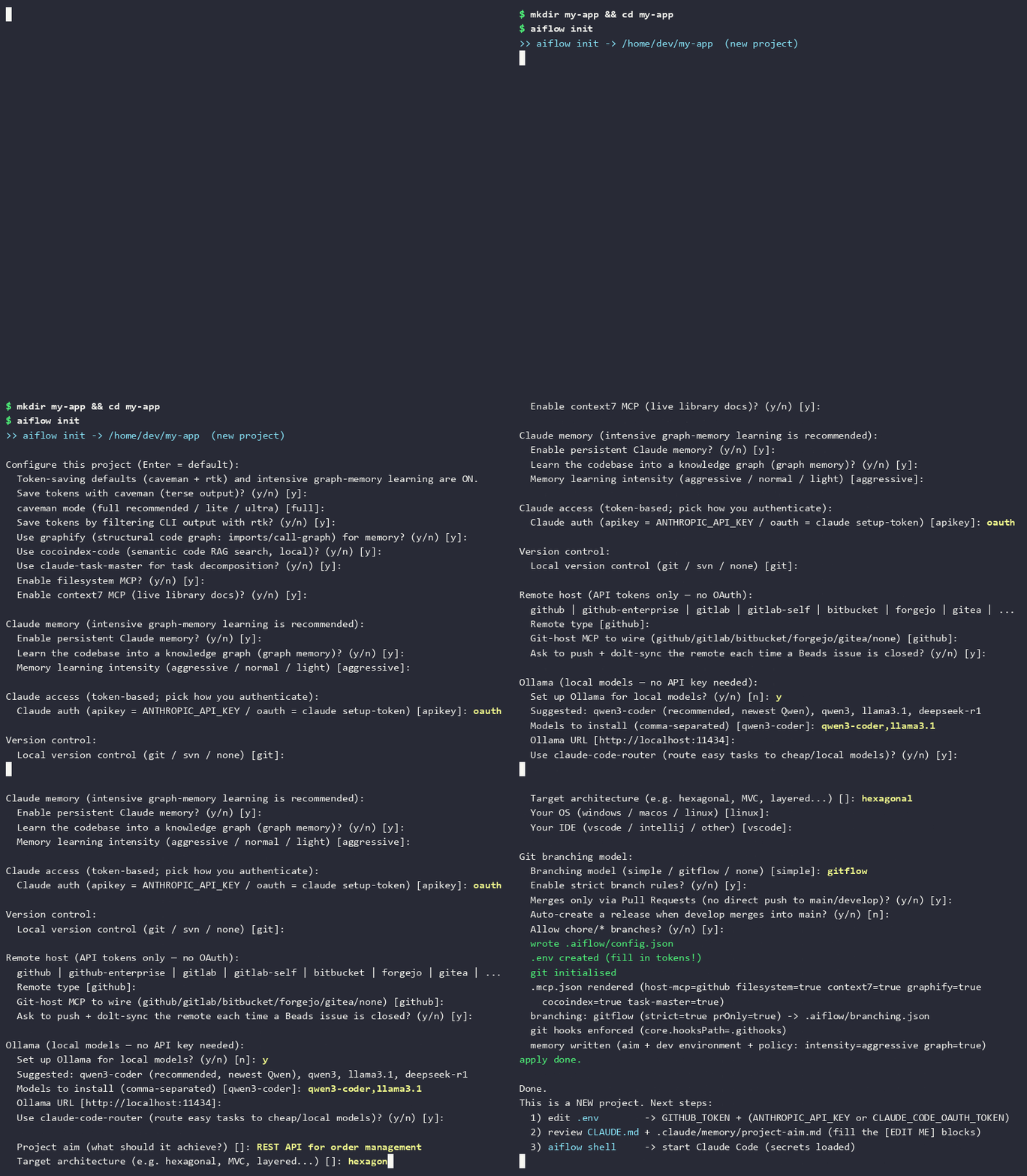
1. Create the project
mkdir order-api && cd order-api
aiflow init
aiflow init asks its questions — Enter always takes the sensible default:
| # | Question | Default | Notes |
|---|---|---|---|
| 1 | caveman (terse output)? + mode | on, full |
saves ~75 % output tokens; --no-token-saving turns it off |
| 2 | rtk CLI-output filtering? | on | trims noisy command output before it hits context |
| 3 | graphify (structural code graph)? | on | answers “who calls X?” without re-reading files |
| 4 | cocoindex-code (semantic RAG)? | on | “find the code about Y”, local embeddings, no key |
| 5 | claude-task-master / filesystem MCP / context7 MCP? | on | task decomposition, file access, live library docs |
| 6 | Persistent memory + graph learning + intensity | on, aggressive |
durable facts in .claude/memory/ (Claude Code only) |
| 7 | Coding agent(s) — Claude Code / GitHub Copilot / OpenAI Codex CLI | Claude Code on, others off | any combination; renders AGENTS.md + per-agent MCP config — see Multi-Agent Support |
| 8 | Claude auth | apikey |
or oauth (claude setup-token, uses your plan) |
| 9 | Version control | git |
or svn / none |
| 10 | Remote host + GitKraken MCP? | github; GitKraken off |
github-enterprise, gitlab(-self), bitbucket, forgejo, gitea, custom, none — token-based; GitKraken wires alongside any host, it’s a client not a host |
| 11 | Sync on issue close? auto-pull at start? | yes / yes | team collaboration via the shared Dolt issue DB |
| 12 | Ollama (local models)? which? | off; qwen3-coder suggested |
local models for easy/background steps, no API key |
| 13 | claude-code-router (cheap/local model routing)? | on if Ollama is on, else off | routes easy/background tasks away from top models |
| 14 | Shared team preferences? | off; style google |
committed team-wide conventions |
| 15 | Project aim / architecture / OS / IDE | empty — fill it! | the cheapest quality lever; see below |
| 16 | Git branching model | simple |
or gitflow / none; strict rules + PR-only default yes |
For the aim, answer something like:
Order-management REST API for our internal shops. Hexagonal architecture on PostgreSQL. Correctness and auditability beat raw speed; every endpoint ships fully tested.
What gets generated: .aiflow/config.json (single source of truth), AGENTS.md (operating
rules incl. quality gates §3a, REST rules §3b, database rules §3c), .claude/agents/ +
.claude/commands/ (the whole roster), .mcp.json, git hooks (format/lint/test + Conventional
Commits + branch rules), .env from .env.example, memory seed files, and the Beads issue DB.
2. Fill secrets and start
# edit .env → GITHUB_TOKEN + (ANTHROPIC_API_KEY or CLAUDE_CODE_OAUTH_TOKEN)
aiflow shell        # loads .env, launches Claude Code with all MCPs wired
3. First feature, end to end
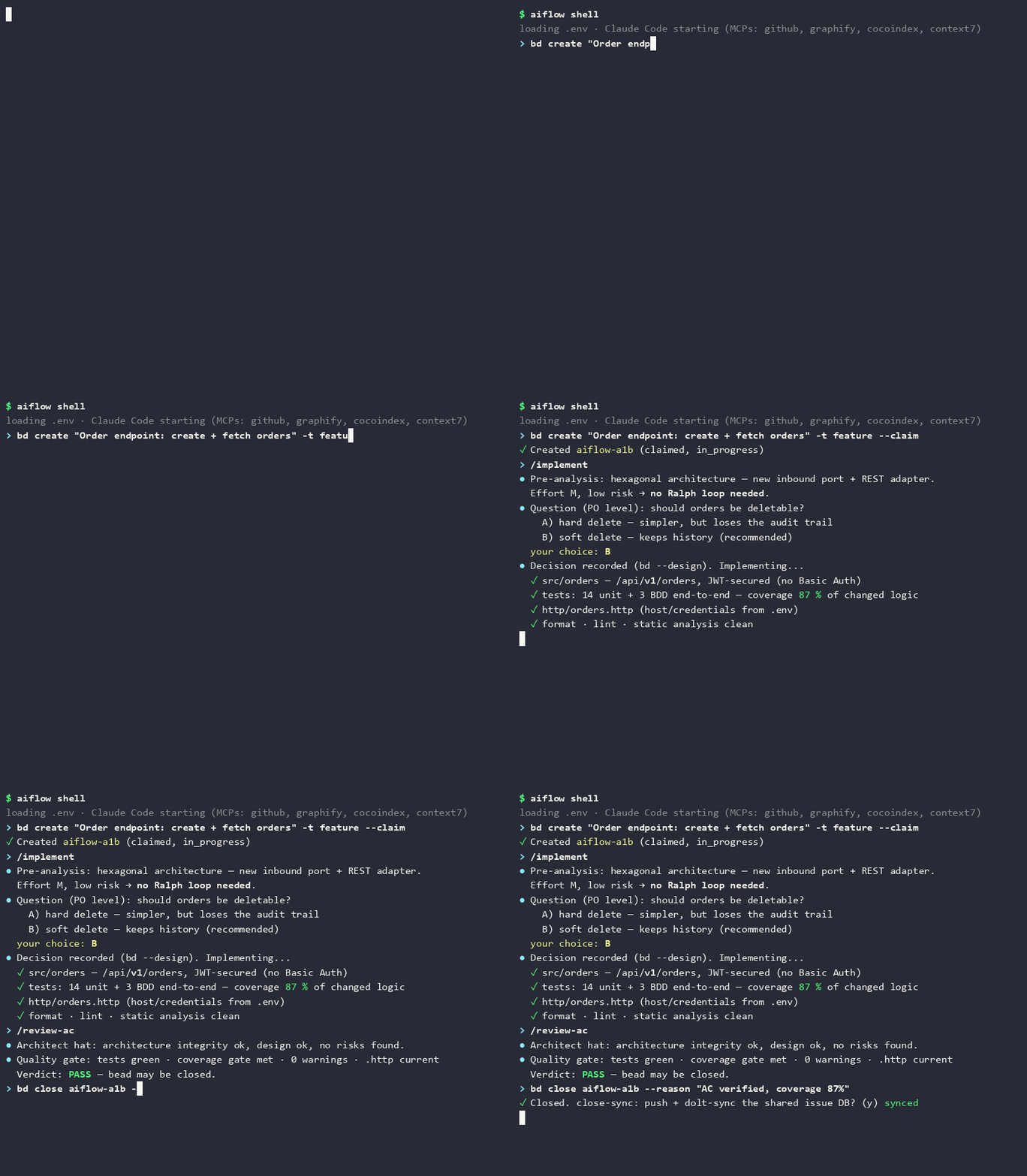
Inside the session:
bd create "Order endpoint: create + fetch orders" -t feature --claim
/implement
What the implementer now does — automatically:
- Pre-analysis first: current architecture, how it changes, effort, complexity, risks —
and from that the Ralph-loop decision (small task → direct; long-horizon → the loop).
You can also force it:
/implement <bead> ralph, or write “use the Ralph loop” into the bead. - PO-level questions where the requirement is ambiguous (“Should orders be deletable, or cancelled with history? A) hard delete — simpler, loses audit trail; B) soft delete — keeps history, slightly more code”). Your answer is recorded as a decision.
- Builds production-ready: versioned + secured REST (
/api/v1/orders, JWT — not Basic Auth), ≥ 3NF data model with real foreign keys, leveled logging, SOLID/KISS-sized classes. - Ships tests (unit + BDD end-to-end, > 80 % coverage of the changed logic) and an
.httpfile (http/orders.http) you can run from IntelliJ/VS Code — host/port/test user come from.env. - Runs formatter, linter, static analysis until clean.
Then the gate:
/review-ac
The reviewer (architect + quality gate in one) checks architecture integrity, design, risks,
and the objective checklist — verdict PASS or CHANGES REQUIRED. Out-of-scope ideas are
persisted as [suggestion] beads. After PASS:
bd close <id> --reason "AC verified: endpoints tested, coverage 87%"
# aiflow close-sync asks whether to push + sync the issue DB (team stays current)
4. What you’d tune next
AGENTS.md §1/§2— project overview + architecture hints (biggest quality lever)..claude/agents/*.md— the shipped agents are deliberately generic; add your domain language, review focus, test stack.- On-demand checks:
aiflow security-check,aiflow a11y-check(strict WCAG),aiflow modernize-check(brownfield modernisation report),aiflow quality-check, and more — see Commands. - Existing codebase instead?
aiflow initdetects it and offersaiflow onboard— it learns the code into memory, fillsAGENTS.md, and proposes a project aim for you to confirm.
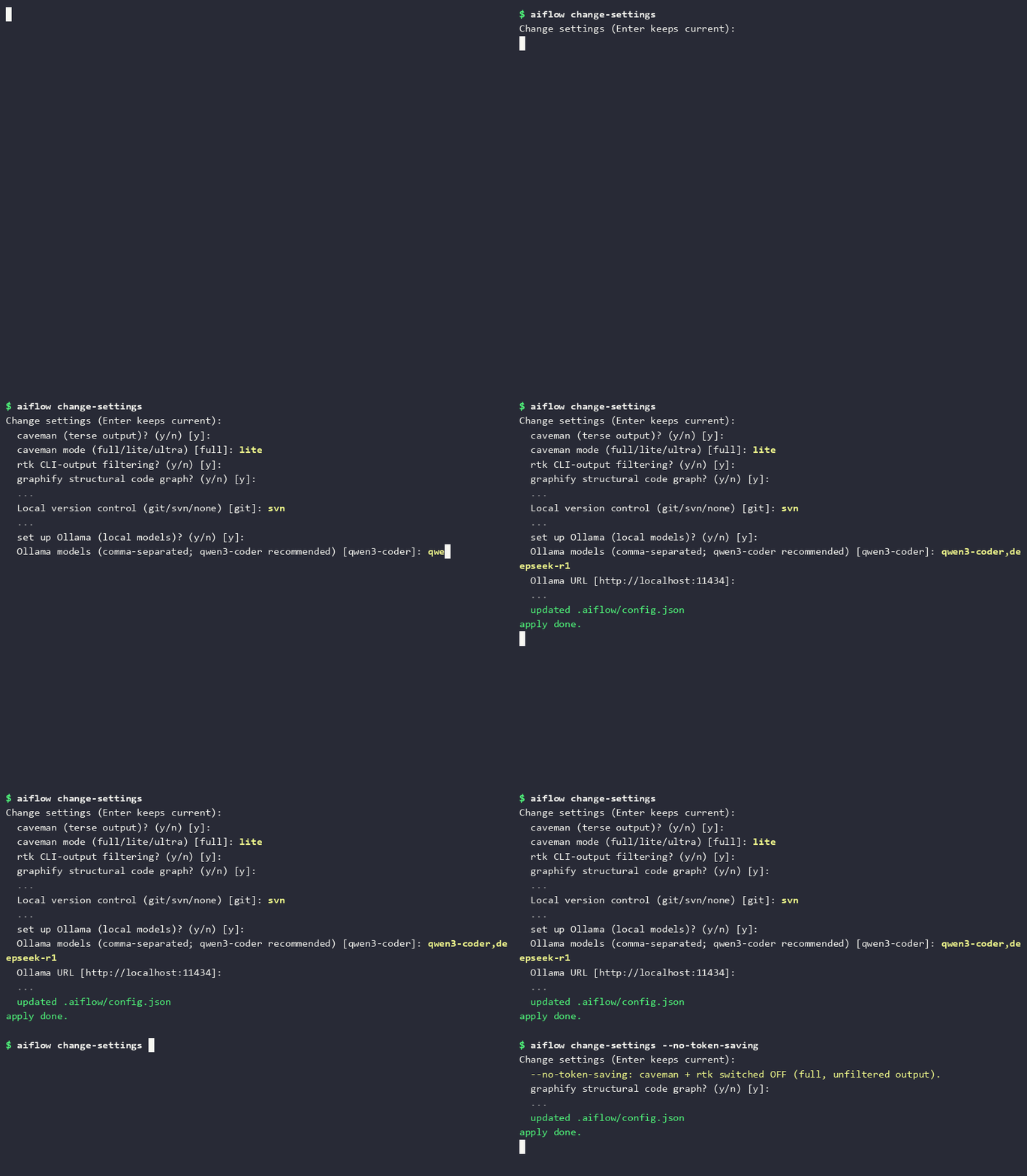
Change any choice later with aiflow change-settings (or --no-token-saving to switch
caveman + rtk off).